By Helen Marsh, PhD | Health › Digestive Health
Retired Physiology Professor Shows Why IBS-D Diarrhea Gets Worse After 50, and the 1902 Discovery That Explains It All (No Restrictive Diets Required)
A food that was perfectly safe yesterday can send you running today, yet every test comes back normal. After 23 years teaching how the gut works, she explains the hidden step that breaks down after 50, and the simple change before your biggest meals that over 25,000 people have now made.

Every week, a letter or an email arrives from someone over 50 with IBS-D asking me the same question. It comes at the very end, after a page of everything they’ve tried: “Why does this keep happening to me?”
My name is Helen Marsh. For 23 years I taught digestive physiology, the course every future doctor and nurse takes before they ever see a patient. I retired three years ago, and the letters kept coming.
The honest answer to that question takes longer than a 15-minute appointment, so it almost never gets said.
I’m going to say it here, start to finish, in plain English.
Millions of people over 50 live with IBS-D, and most of them have quietly built their days around it.
A bag of spare clothes rides in the car, the nearest restroom gets found before the car is even parked, and breakfast gets skipped on any day that means leaving the house.
I’ll be fair to the advice they’ve been given, because some of it helps. Imodium does slow things down, and cutting a few foods can take some pressure off.
For a while, it can feel like you’ve got it handled.
But I also hear the other side, because the same people keep writing back.
The pill that worked last week does nothing this week, and taking an extra one backs them up for days before everything comes through at once.
Their list of safe foods gets shorter every year, and the tests keep coming back normal. Meanwhile the warning they used to get shrinks down to almost nothing.
That’s when most of them hear the sentence I’ve come to dread: “You’ll just have to learn to live with it.”
Then the pads start.
That’s why, when someone asks me that question now, the first thing I give them is the why.
Once you understand why it’s happening, what to do about it gets simple, and it starts at your next meal.
Read this to the end. It answers the questions people ask me most:
- Why does IBS-D hit with no warning, even on a day you did everything right?
- How can the same lunch be fine on Tuesday and a disaster on Thursday?
- Which part of the problem does the usual advice leave untouched, and why is that the part that has to be fixed first?
- What can you change at your next meal, with no diet to follow?
- And why has nobody explained any of this to you before?
Your age won’t change a word of what follows. Neither will how long you’ve had it or how many doctors you’ve seen.
The only thing that matters is that you want your days back, and you want them back for good instead of one lucky day at a time.
See which of these sounds like you:
Then you know the cold panic of feeling fine one minute and running the next.
You didn’t lose control because you’re weak or careless. When food reaches your colon before it’s broken down, your body skips the warning step, and I’ll show you exactly why further down.
Then you’ve probably kept a food diary that never added up.
Something did change between those two days. It changed inside you, where no diary could ever see it.
Then you probably take one before any drive longer than twenty minutes, just in case.
Imodium slows the muscles of your gut down, and that’s all it does. It can’t change what’s arriving in your colon, and that’s the part I’m going to explain.
As someone who taught what those tests actually measure, let me tell you a secret: a normal colonoscopy only means the surface of your colon looks healthy.
It cannot see if your food is breaking down before it gets there, and standard tests don’t check for that. If you haven’t had them, have them anyway, because the serious causes have to be ruled out first.
Supper is the biggest meal of the day for most people.
When it isn’t fully broken down, your colon works on it all night, while you’re asleep and can’t feel it coming. It’s the same problem, happening in the dark.
First it was the restaurant, then the road trip, and now it’s the grandkids’ ballgame.
Nobody told you to stop going, and the fear decided anyway, one plan at a time. That fear makes sense, and it starts to loosen once the attacks stop being random.
Why “learn to live with it” was never good enough for me

In 23 years of teaching, and three more of answering letters, I’ve seen the same story more times than I can count.
Someone goes to the doctor with diarrhea that won’t quit, and the tests come back normal. They leave with a diet sheet and a box of Imodium, and a year later they’re back with fewer safe foods and a shorter warning.
Some of them stop going back at all.
When they write to me, they all say the same thing: nothing worked, so they quit asking.
I think about the woman who wrote that she’d started eating one meal a day, just supper, so she could get through her morning errands.
A man in his seventies wrote that he’d turned down his own daughter’s wedding trip because he couldn’t face the drive.
Every one of them gave up for the same reason. Nobody had ever explained what was going on inside their own body.
The usual advice helps a little, and it stops one step short
The usual advice isn’t foolish. Slowing things down, cutting a few foods and calming your nerves can all take the edge off a bad day.
And none of this is your fault. A gut that has carried this for years gets worn down, and that has nothing to do with willpower.
But advice that only works on your colon, after the food has already arrived half-digested, is a partial answer at best.
And this is worth taking seriously, because of everything that comes attached to it.
Left alone, it rarely stays where it is. Over a few years the warning shrinks from twenty minutes to nothing, and the list of safe foods drops to a handful. That’s when the pads come out and people start turning down invitations.
It doesn’t have to go that way.
“You’ll never fit that explanation into a fifteen-minute visit, Helen.”
One of my former students said that to me years after she became a gastroenterologist, and she said it kindly. She’s a good doctor with a full schedule.
She was right about the fifteen minutes. That’s why the explanation gets skipped, and why so many people go home with a diet sheet instead of an answer.
So I kept explaining it, first in the lecture hall and now in letters, to anyone who asked.
After 23 years and thousands of students, I can boil the whole thing down to one fact. It sounds almost too simple:
Your diarrhea happens in your colon, but it starts one step before it

The scope looked at your colon, and the pills you’ve been handed work on your colon.
Your colon is the last stop, though. By the time food gets there, the real work is supposed to be finished.
That work happens one step earlier, in your small intestine. It runs on digestive enzymes, which your body makes every time you eat to take your food apart.
There’s one for protein, one for fat, one for the sugar in milk, and a few more for beans and vegetables.
When your body makes enough of them, your food gets broken down completely. Your colon only ever sees waste that’s ready to have the water pulled out.
In a lot of people with IBS-D, the body doesn’t make enough.
Up to 68% of people with severe IBS-D and urgency have some degree of enzyme insufficiency.
It happens slowly, with no pain and no warning sign, and the amount your body makes goes up and down from one day to the next.
Your enzyme output starts falling in your twenties and keeps slipping every decade after. One study of more than 900 adults between 50 and 75, all at routine checkups, found more than one in ten with enzyme output low enough to be called insufficient.
A second study looked only at healthy people over 60 who had no digestive disease and had never had surgery or diabetes. It found one in five. None of them knew, and they were found only because somebody went looking.
When someone describes their IBS-D to me, I look for three things. That one shortfall explains all three.
When a meal reaches your colon half-digested, your colon treats it like an emergency. It squeezes hard, pushes water in instead of pulling it out, and empties as fast as it can.
That’s why it’s liquid, why it cramps, and why it comes on so fast. A normal bowel movement sends a warning first, and an emergency skips that step.
The amount of enzymes changes from day to day, so a lunch that’s fine on Tuesday can go through half-digested on Thursday.
The food didn’t change between those two days. What changed was how many enzymes your body made, and you can’t feel that at the table.
Every half-digested meal irritates the lining of your gut a little. A worn lining breaks food down even worse, so more half-digested food gets through and the lining wears a little further.
That’s why the warning time shrinks over the years, from twenty minutes to ten to none.
Most people who write to me with that question recognize all three.
And not one thing they’d been given worked on the step where all three begin.
Now you can see why nothing you’ve been given has fixed it
Imodium only changes how fast your colon moves. The half-digested food still arrives, just later.
A diet sheet shrinks your plate, and whatever you still eat goes through exactly as before.
When you’re told it’s stress, you end up working on your nerves, and nobody looks at the meal at all.
None of those helps your body break down the food you do eat. That step never even came up.
That’s why the results feel random, no matter how carefully you follow the advice.
It’s also why, once the usual advice runs out, the only thing left to tell you is to learn to live with it.
You don’t have to.
What I tell people now is to fix the step before the colon. Finish breaking the food down at the meal, and give the lining a chance to heal.
That takes three things working together:
- 1
Every kind of food gets broken down. That means all the enzymes, for protein, fat, dairy, beans and vegetables, because any one that’s missing still sends that food to your colon half-digested.
- 2
The worn lining gets a chance to heal. Three specific probiotic strains help rebuild it while the enzymes stop the damage.
- 3
The timing is right. The enzymes have to be there when the food is, so one capsule goes in 20 to 30 minutes before each of your two biggest meals.
Most products on the shelf cover only one of those three. That’s why so many people try an enzyme once, feel a small difference, and give up—because the complete mechanism wasn’t there.
“It has given me my life back”
It truly works. I was wasting away because nutrients were not staying in my system. I have used this about 6 months. It has given me my life back. That is everything.
Sandy P. · ClearDose customer
Six months in
ClearDose: all three parts in one capsule
The one I tell people about is ClearDose Digestive Enzymes.
It’s the only one I’ve found that does all three in a single capsule.
It breaks down every kind of food
Its Makzyme-Pro blend carries six enzymes, and every one is listed on the label.
Protease and lipase take protein and fat, and fat that doesn’t get broken down is one of the biggest diarrhea triggers there is. Lactase takes the sugar in milk, which is why a splash of cream in your coffee can wreck an afternoon.
Alpha-galactosidase handles beans and vegetables. Bromelain and papain finish off the protein.
It helps the worn lining heal
Three probiotic strains, L. Plantarum, L. Acidophilus and L. Casei, help rebuild the lining that years of half-digested food have worn down.
The enzymes stop the damage, and the strains repair what’s already been done. That’s what makes the results last, and it’s the part almost every enzyme product on the shelf leaves out.
It’s there when the food is
You take one capsule 20 to 30 minutes before each of your two biggest meals, so the enzymes are already waiting when the food arrives. The strains build up over four to eight weeks.
The difference in one sentence: ClearDose works on the meal itself, at the step where the problem starts, while everything else waits for the food to reach your colon.
It’s third-party tested and made in an FDA-registered facility in the USA. Over 25,000 people have taken it.

THE OLD ROUTINE
Finding the restroom before the cart is half full.

THE GOAL
Enjoying life again, eating without worry, and being present with those you love.
Why it goes in right before your meal, and not first thing in the morning

In 1902, two physiologists in London discovered the first hormone anyone had ever found.
It’s a signal your small intestine sends the moment food leaves your stomach. It tells your pancreas the food has arrived, and your pancreas sends its digestive juice down to meet it. The problem is that while this signal fires at 60 just as perfectly as it did at 20, your aging pancreas simply sends less digestive juice down to the food.
Your body has always run on this exact timing. The digestive juice is supposed to arrive the moment the food does.
That’s why taking a standard enzyme pill at seven in the morning on an empty stomach is useless—it’s long gone by lunch. It’s also why so many people who tried a cheap bottle from the pharmacy felt next to nothing.
ClearDose goes in 20 to 30 minutes before you eat, so the enzymes are firmly in place when the food arrives. By the time you sit down to a heavy supper, a full dose of digestive power is already waiting to tear the meal apart.
“I can go to a store and not fear that I’ll have to run to the bathroom”
Started with this product about 6 months ago and now I’m back to normal. … I can go to a store and not fear that I’ll have to run to the bathroom. It’s given me hope for a better life.
Christina B. · ClearDose customer
Back to the store without the fear
Six enzymes and three strains, and why they only work together

None of these ingredients are experimental. In fact, they do the exact jobs your body was supposed to be doing all along.
On its own, each one covers a single piece. A lactase pill handles milk and nothing else, a probiotic breaks down no food at all, and a single-enzyme product leaves the rest of the meal half-digested.
Most products cover one of these pieces, which is why so many of them feel like they did nothing. It takes all of them together, at the meal.
See how simple it is
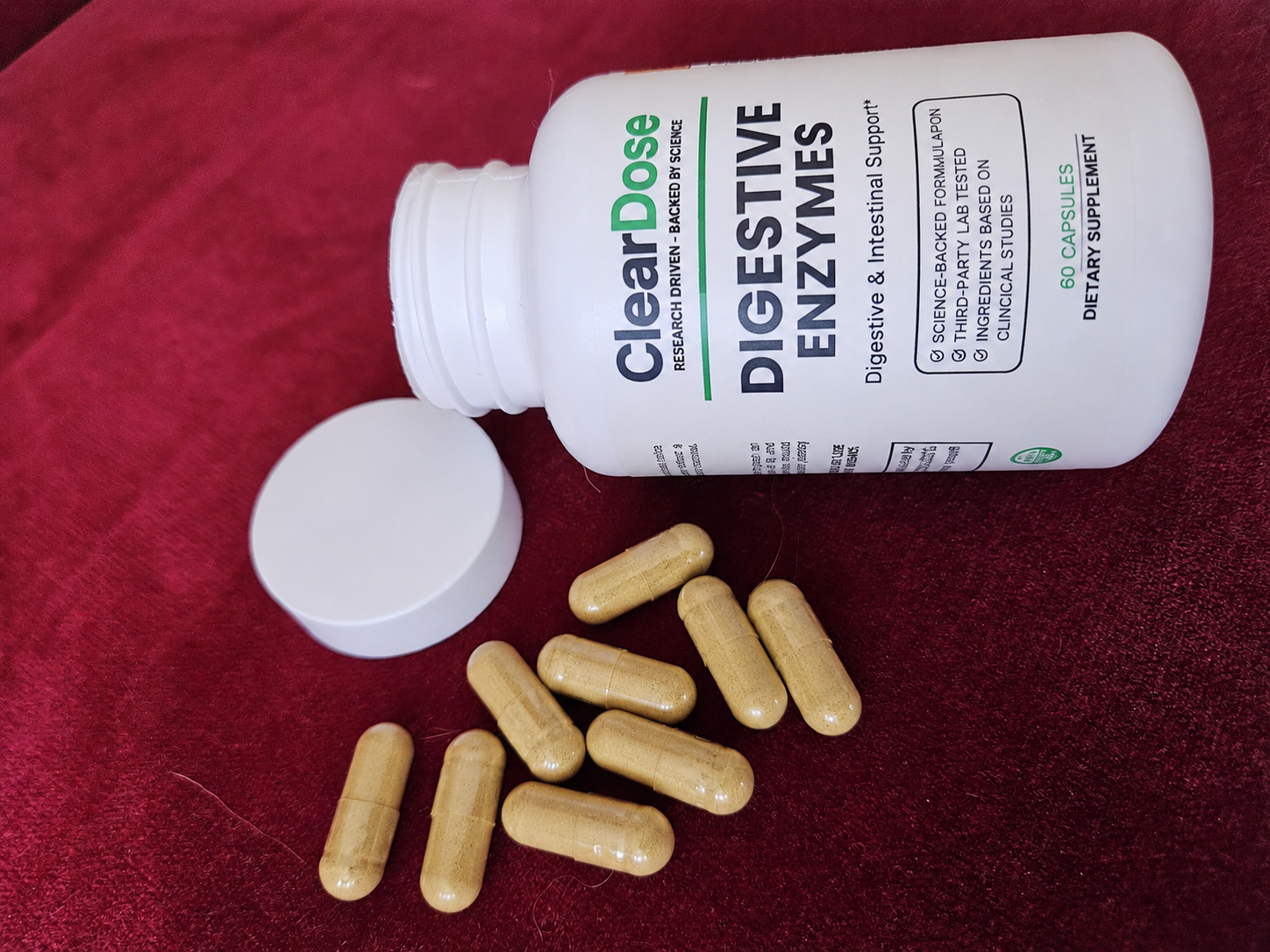
There’s no diet to follow and nothing to write down, and you don’t have to plan your day around it.
You take one capsule 20 to 30 minutes before each of your two biggest meals, lunch and supper for most people, and get on with your day. A bottle is 60 capsules, which is one month.
If you can remember a capsule before supper, you can do everything this asks of you.
Who this is for
This is for adults with IBS-D, the diarrhea kind, who have lived with it for a while and already tried the usual advice.
It doesn’t matter whether that’s two years or twenty. If you’ve kept the food diary, cut out the dairy, tried the pills and been told it’s stress, and your tests still come back normal, I wrote this for you.
It’s for the people who plan their days around a restroom. They find the restroom before they park, skip breakfast before errands, and keep spare clothes in the car.
And if you’ve had the quiet feeling for years that “IBS-D” describes what your body does without ever explaining why, you were right. This article is the why.
What sets ClearDose apart from what’s in your cabinet, at a glance

- ✓It works on the step before your colon. The food gets broken down at the meal, so your colon isn’t handed an emergency.
- ✓Every kind of food is covered. Six enzymes for protein, fat, dairy, beans and vegetables, where single products cover one.
- ✓The lining is part of it. Three targeted strains help your gut lining heal over four to eight weeks.
- ✓You keep your food. Meals stay on the table, and the list stops shrinking.
- ✓Made with care. Clinical-grade, third-party tested ingredients, gluten-free, made in an FDA-registered facility in the USA.
- ✓About $1.06 a day. That’s the daily cost with the five-bottle bundle, and the 90-day money-back guarantee covers the whole order.
What customers report
These figures come from ClearDose customers. Individual results vary.
Users reporting significant improvement within 6 to 8 weeks
74%
Trustpilot rating
That number is measured at six to eight weeks for a reason. The enzymes start on each meal from the first day, but the lining is the slow part.
The people it fails are the ones who quit at week two, expecting a light switch.
“Love the stuff! Has given me my life back at least 80% of the time. (I still have bad days but so many less).”Andee V., ClearDose customer
I’d rather show you an honest review than a perfect one, because the bad days don’t vanish all at once.
“This product was a dream come true”
This product was a dream come true. I have my life back. I haven’t taken Imodium in almost a month. Next will be the diapers and pads. Still afraid something will happen.
Sherry M. · ClearDose customer
Almost a month in
That last line is the truest thing on this page. Your gut gets better before your head believes it.
For weeks, your body can behave while you still pick the seat closest to the door. That fear fades too, a while after the rest of you has settled down.
Why nobody has explained this to you before
If this works, the obvious question is why nobody has told you. There are three plain reasons.
First, there’s no drug for an everyday enzyme shortage. No drug company is out there teaching doctors about it.
Second, there’s no routine test for it. So it never shows up on your chart.
Third, the visit is fifteen minutes. This explanation takes longer than that.
Until now, the only way to hear all this was to sit through a physiology course, and most people never get that chance.
That’s the gap ClearDose fills. It gives your body what the standard workup never checks for, right at the meal, and you don’t need a prescription to get it.
Why the five-bottle bundle is the only way I recommend starting
I recommend the five-bottle option because of the timeline. The enzymes go to work on your very first meal, but the lining repair takes time. Buying three bottles gets you two for free, that’s $106 worth of product handed to you. This gives your gut the exact time it needs to heal without you paying extra.
Those two extra bottles cover the window most people quit before, and it works out to as low as $1.06 a day.
This is also their pre-Black Friday offer, opened early. It’s the best one they run all year, and they’ve opened it early because the holiday travel and heavy meals of November are exactly when you’ll need this mechanism fully repaired. You don’t want to wait until the holidays to begin.
So my advice is to start before your next big meal. The guarantee runs 90 days, so the risk isn’t yours.
Every order comes with three protections
Starting takes one capsule before your next big meal, and the guarantee covers the first 90 days.
Here’s what the first eight weeks look like:
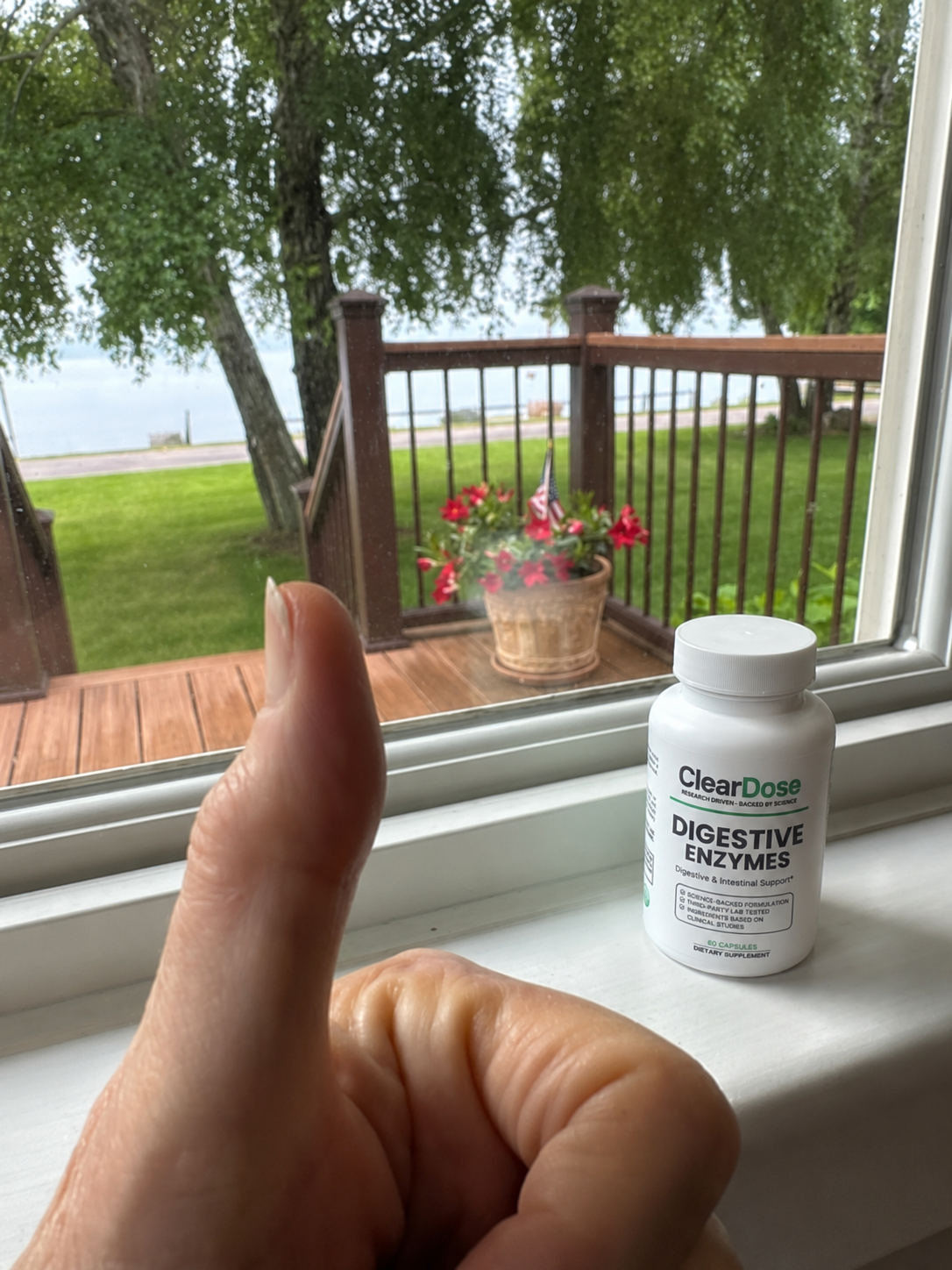
- ✓
The first week: Expect very little, and maybe some extra gas as the enzymes get to work on food that used to pass straight through.
- ✓
Weeks two to four: The urgency eases, and most people get their first stretch of normal days.
- ✓
Weeks five to eight: The lining repair builds and the day-to-day guessing fades. This is the window where 74% of users report a significant improvement. In real life, that looks like your first full week of normal days, and a bag of spare clothes that hasn’t been opened once.
- ✓
After that: The good days start to outnumber the careful ones.
You now have three options.
1. Do nothing.
Keep the routine you have now. If your days are already exactly where you want them, you don’t need ClearDose, and you should close this page.
2. Keep going the old way.
More pills, a shorter food list, another round of tests, and eventually the conversation about pads.
3. Start with your next meal.
One capsule 20 to 30 minutes before each of your two biggest meals, with a 90-day money-back guarantee behind it. If it doesn’t help, you get a full refund, and the only real risk is staying where you are.
Only you can make this decision. I’d just ask that you make it before your next meal.
Thank you for reading this far. I know it was a lot, and I know you’ve been promised things before.
The longer this goes on, the smaller your days get. Eight weeks from now, you’ll know whether today was the day that started to change.
I wish you the very best of health, and days out without a restroom plan.Helen Marsh, PhDRetired professor of digestive physiology, 23 years

You only pay if it works for you
One more thing, because I know how many times you’ve been let down before: the risk sits entirely on their side of the table.
Every ClearDose order comes with a 90-day money-back guarantee. Take it before your meals for up to 90 days, and if your symptoms don’t improve, contact ClearDose for a full refund, no questions asked.
Ninety days covers the eight weeks the lining needs, with a month to spare. All that’s left with you is the decision.
Questions readers ask me most
The questions I hear most, with my answers.
“Does it really help with IBS? I’ve tried everything.”
Almost everyone who asks me that has tried everything, and that’s exactly who I wrote this for.
Everything on the usual list works around the problem. If your IBS is the diarrhea kind, the step before the colon is the one nobody has worked on yet, and that’s where this works.
“I already tried an enzyme from the pharmacy and it didn’t do much. Why would this be different?”
Read the label on the one you bought. If it has two or three enzymes, no lactase and nothing for the lining, and says to take it once a day in the morning, it was covering a piece of one meal.
The shortfall happens at every meal, so the enzymes have to be there at your big meals, all six of them.
“I have IBS-M, some days one way and some days the other. Would this help me?”
The enzymes are for the diarrhea side.
Constipation is a different problem, and I won’t promise anything on that side. If your bad days are mostly the diarrhea days, those are the ones this is built for.
“Is this a lifetime commitment, or does it eventually solve the problem?”
You take the enzymes for as long as you want your meals broken down, because they work on the meals you take them before. The lining repair is the part that builds up and stays.
“Can I take it with my medications?”
It’s enzymes and probiotics, the same things a healthy gut runs on.
One caution: bromelain can thin the blood a little, so if you’re on a blood thinner, show the bottle to your pharmacist before you start.
“How will I know it’s working?”
The first sign is small. Some afternoon you’ll realize you got through the grocery store without once looking for the restroom.
A second sign takes longer, and it’s the one I’d watch for. Some week you’ll put a food back on the list without stopping to work out whether you can afford to.
“My gallbladder is out. Will this work for me?”
If your diarrhea started after the gallbladder came out, the main problem is bile. Without the gallbladder, bile drips into your gut all day instead of arriving with the meal. That needs a different fix.
ClearDose makes a separate formula for it, ClearDose Ox Bile Complex. Start there.
“How do PPIs like Nexium or Prilosec affect this?”
They lower stomach acid, and stomach acid is part of the signal that tells your pancreas to release enzymes, so you’re more likely to be short, not less.
Don’t stop the PPI. Take the enzymes before your two biggest meals.
“Isn’t this just pancreatic insufficiency? Shouldn’t I be tested?”
Exocrine pancreatic insufficiency is the serious, diagnosed form, where the pancreas makes very little. It comes with weight loss and greasy, oily stools, and it needs a doctor and prescription enzymes.
If that sounds like you, ask your doctor for a stool elastase test first. This article is about the milder, everyday shortfall that never gets tested.
“Is this real or just another gimmick? I don’t have money to waste.”
I’d ask the same thing.
The $106 you may have seen is the value of the two free bottles, not the price. Three bottles cost $159, you can start with a single bottle if you’d rather, and every order carries the 90-day money-back guarantee.
Start at your next meal
Buy 3 bottles, get 2 free · as low as $1.06 a day
START AT YOUR NEXT MEAL (BUY 3, GET 2 FREE) »Pre-Black Friday offer · 90-day money-back guarantee©2026 Digestive Health Review
ADVERTISEMENT: This is a paid advertisement for ClearDose, not a news article. The author, Helen Marsh, PhD, is a composite character created to explain how digestion works. The customer quotes are real comments from ClearDose customers, the reader questions are based on real public comments, and individual results vary.
HEALTH DISCLAIMER: These statements have not been evaluated by the Food and Drug Administration. ClearDose is not intended to diagnose, treat, cure, or prevent any disease. Talk to your healthcare provider before starting any new supplement, especially if you take a blood thinner or another prescription medication, and do not stop a prescribed medication without your doctor’s advice. If you have blood in your stool, unexplained weight loss, fever, or a sudden change in bowel habits, see a doctor.
Terms & Conditions | Privacy Policy | Refund Policy | Contact